
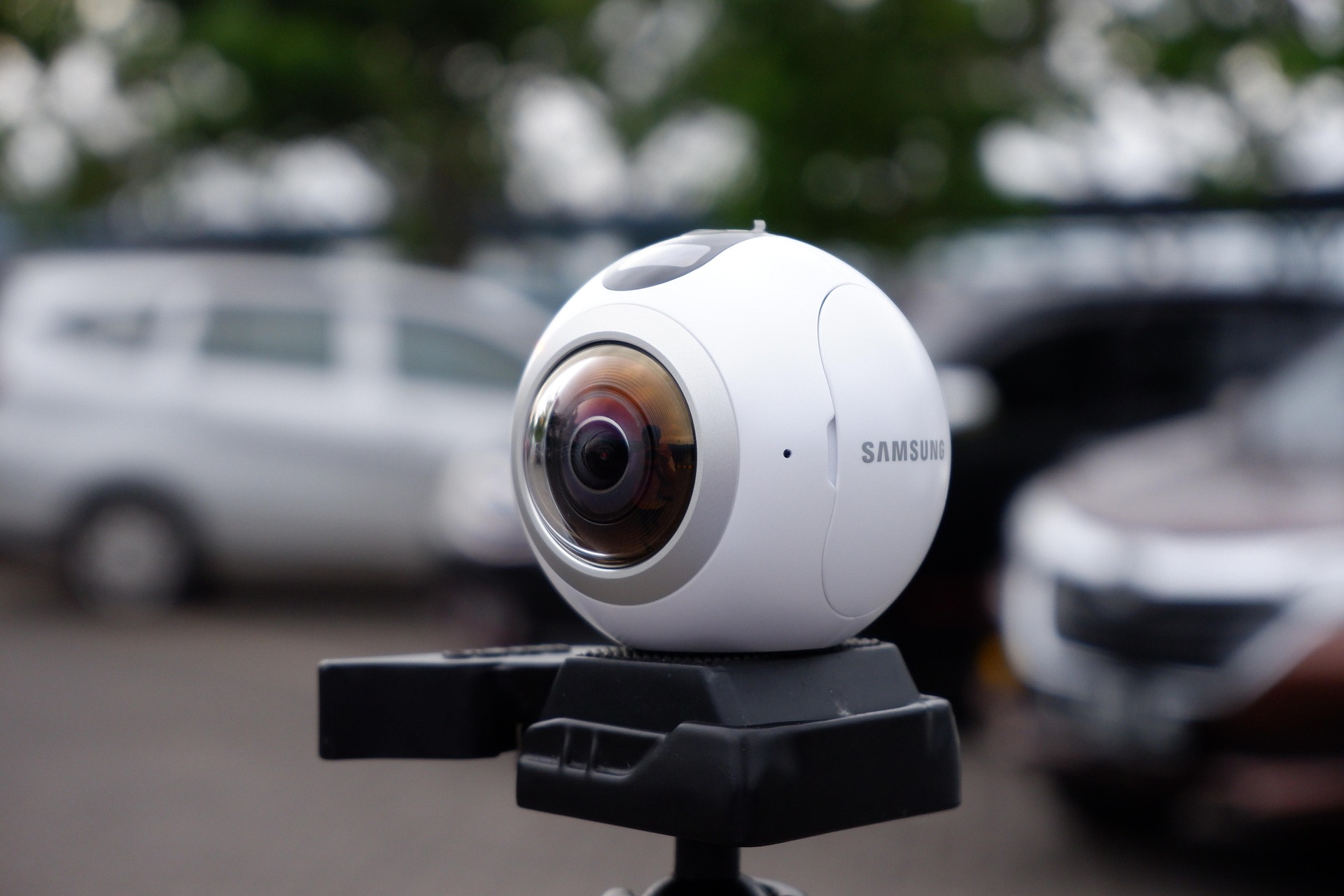
A conventional livestream shows the frame selected by the production team. A 360° livestream captures the scene around a camera position so viewers using a suitable player can choose where to look. The difference is about the viewing experience, not simply whether one stream has more pixels.
Who chooses the viewpoint?
With a conventional broadcast, the director can move between close-ups, slides and audience shots. In a headset-based 360° experience, the viewer can turn their head to explore the captured surroundings. They remain at the camera’s viewpoint; looking around does not automatically mean walking anywhere in the venue.
Which details matter most?
A close-up can make a tiny product feature or a chart easy to inspect. A wider immersive view can convey the room and its atmosphere. Choose the format around what the audience needs to understand. If the event depends on fine text, test readability before choosing the production setup.
What equipment changes?
360° capture requires a compatible camera and a streaming workflow that supports its output. Conventional capture may use a single camera or a more elaborate production. For OowOah Live VR, organisers need compatible equipment and remote guests use a supported headset.
Do you have to replace the physical event?
No. Live VR can be added to the event you already run, providing another attendance option. Keep the venue experience and explain the remote viewpoint clearly. Test both picture and sound from the audience’s device before offering tickets.