
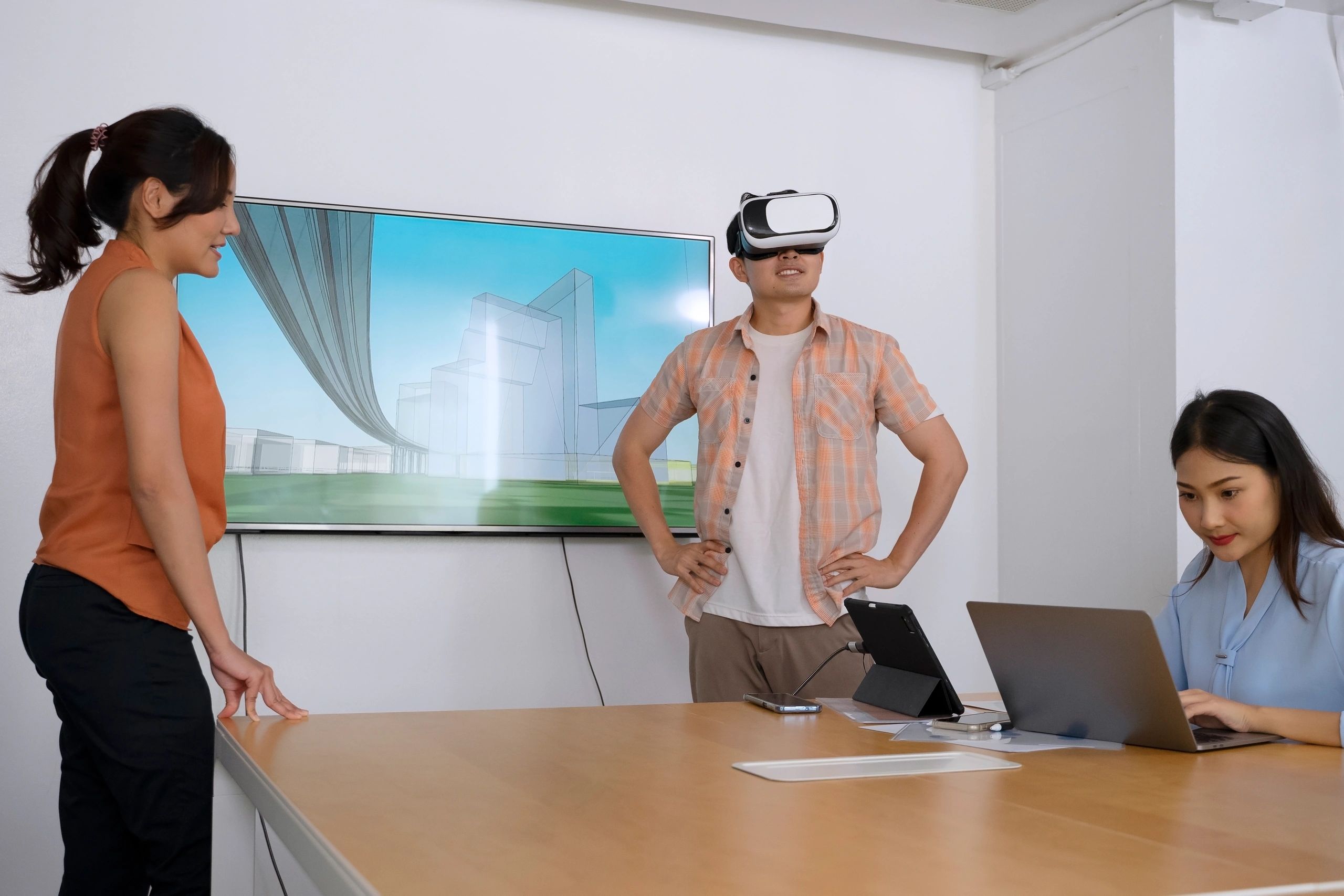
Virtual meetings bring people together without requiring them to travel to the same place. That can make collaboration more practical, but it also changes how people communicate. The advantages and disadvantages depend on the task, the participants and the technology.
What are the advantages?
Remote attendance can reduce journeys and make it easier to involve colleagues in different locations. People can discuss shared information without booking the same physical room. These benefits are strongest when the appointment would otherwise require a genuine trip.
What are the disadvantages?
Connections, audio and unfamiliar controls can interrupt the conversation. People may have fewer informal exchanges and a restricted view of social cues. Distractions, poor facilitation and inaccessible equipment can also make it harder to contribute.
How does VR change the balance?
VR offers a shared digital setting rather than only a grid of faces. It introduces headset requirements, comfort considerations and setup work. It is an option to assess, not proof that the disadvantages of remote meetings disappear.
How should you choose?
Match the format to the decision and the people. Use in-person meetings when physical presence matters, video when simple access is the priority, and test VR for tasks where a shared setting may be useful.