
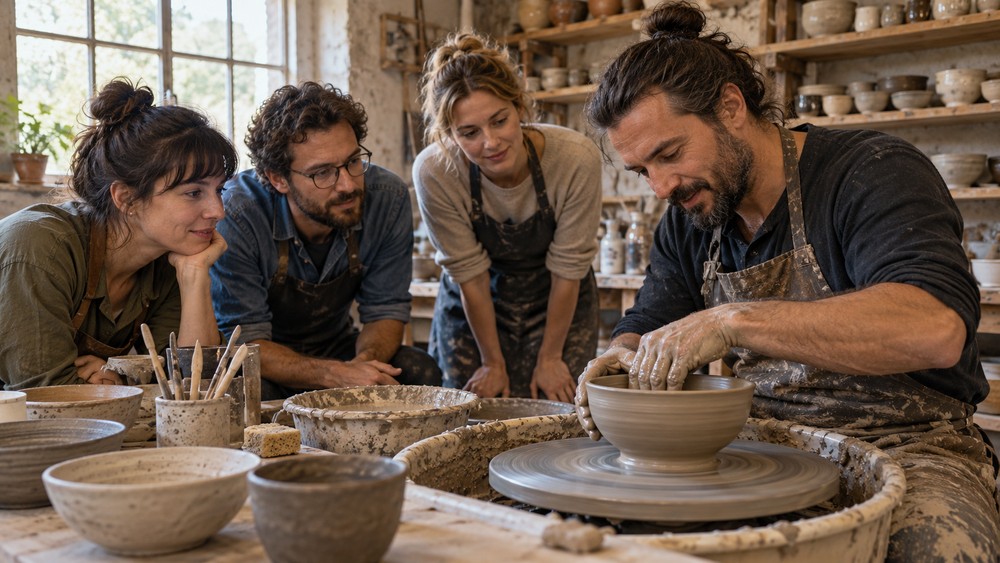
A piece of wood becomes a bowl. Separate ingredients become a meal. A sketch becomes something you can hold. Watching that change can be surprisingly absorbing, especially when somebody explains the decisions along the way.
The process gives the finished object context
A demonstration can reveal time, skill and judgement that a product photograph hides. A maker may adjust a tool, reject a material or change direction. Those choices give an audience something to notice beyond the final result.
Explain the decision, not every movement
A useful host tells viewers why an action matters. Constant commentary can overwhelm the demonstration, while no explanation can leave newcomers lost. Choose a few important moments and give the audience space to watch between them.
Show the detail people came to see
A wide camera view can establish the workshop, but fine work may need a close-up. Test whether viewers can actually see the process. Do not assume that a 360-degree capture is the best tool for every tiny detail.
Keep the invitation realistic
Watching an expert is different from being trained to use their equipment. Make safety boundaries and the purpose of the session clear. A studio visit or remote demonstration can be an invitation to appreciate a craft without pretending one evening turns every viewer into a skilled maker.
Curious about bringing people together remotely? Explore Live VR Events with OowOah.