
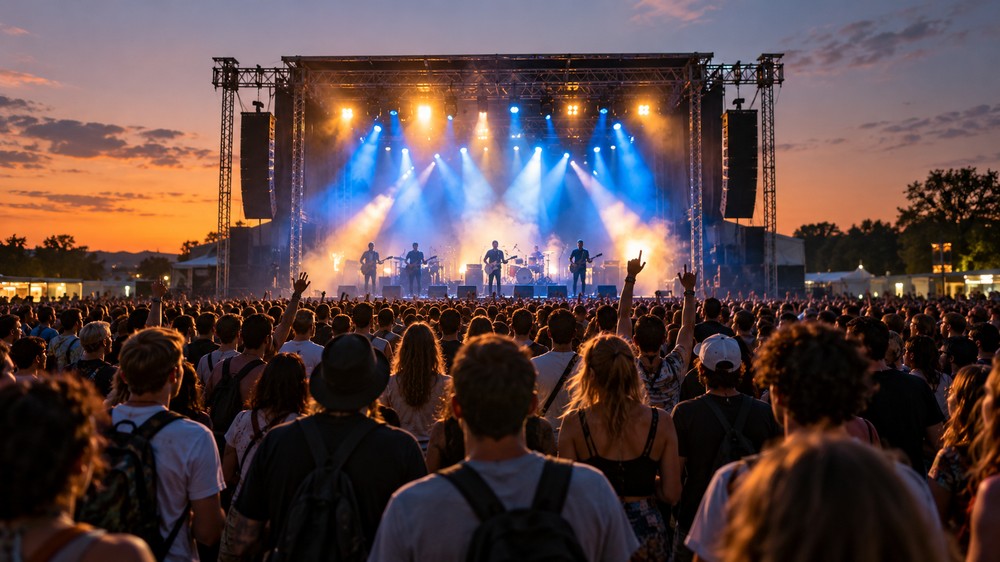
Front row sounds like an obvious winner. Until you find yourself looking up at a stage, beside a speaker or behind somebody much taller. The best seat depends on what you want from the evening.
Close enough to see the details
A nearby position can reveal expressions, small gestures and the work behind a performance. That can be wonderful at a talk or an acoustic show. It may be less useful if the spectacle spreads across a wide stage and you need to keep turning to follow it.
Far enough back to see the whole picture
A wider view can show lighting, movement and the crowd together. Some people enjoy seeing a performance unfold as a complete scene. Others would rather sacrifice that overview to feel close to a favourite performer. Neither preference is wrong.
The camera gets a seat too
For remote audiences, camera placement helps define the experience. A 360-degree view lets viewers look around the camera position; it does not automatically let them move anywhere in the venue. Test the viewpoint at the intended height and check for obstructions.
Describe the experience honestly
Organisers should show or explain the view before people buy access. Make restricted sightlines clear and avoid promising a front-row experience when the camera is at the back. A well-chosen position, clear sound and accurate expectations can make a modest production feel thoughtfully planned.
Curious about bringing people together remotely? Explore Live VR Events with OowOah.