
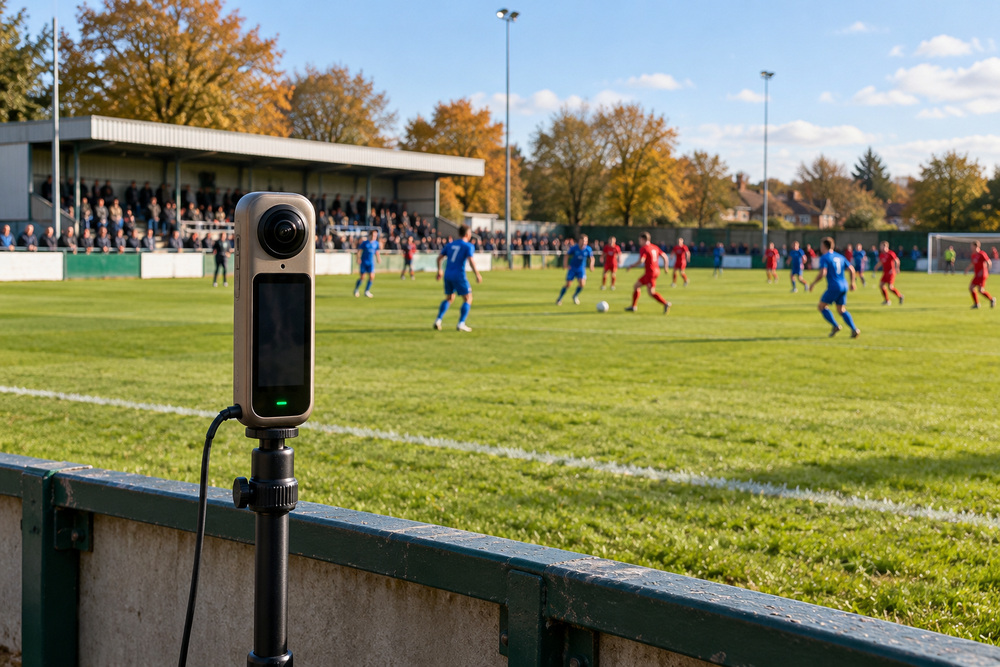
The position of a 360° camera determines where a remote spectator feels located. It also determines what they can see. At a football ground, those two considerations need to work together.
A spot near enthusiastic supporters may convey atmosphere, while a more open, raised position may make the game easier to follow. Neither should be chosen only because it looks good in a photograph.
Follow the whole pitch
Test the near and far touchlines, both goals and the areas where players gather. Check whether barriers, dugouts, standing spectators or advertising boards obstruct the view. Think about what changes after the ground fills up.
A fixed camera does not follow the ball with the zoom and movement of a television camera. Supporters should be able to understand the proposed experience before booking it.
Plan for the people using the ground
The installation should remain clear of play, officials and access routes. Discuss mounting and protection with the club and venue team, particularly where weather or a stray ball could affect equipment.
Sound deserves a location test too. A loudspeaker beside the camera or strong wind might dominate the recording even if the picture looks attractive.
For a potential OowOah broadcast, compare candidate positions through the actual headset experience. A short trial with someone outside the ground can reveal problems that are easy to miss while standing beside the camera.